



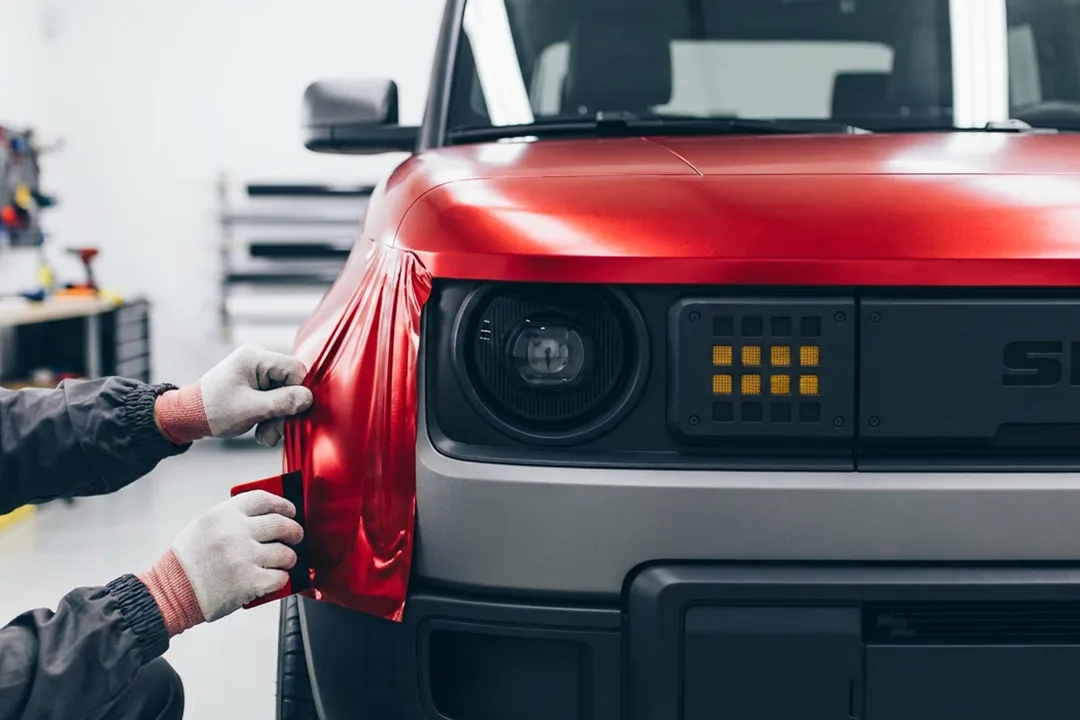
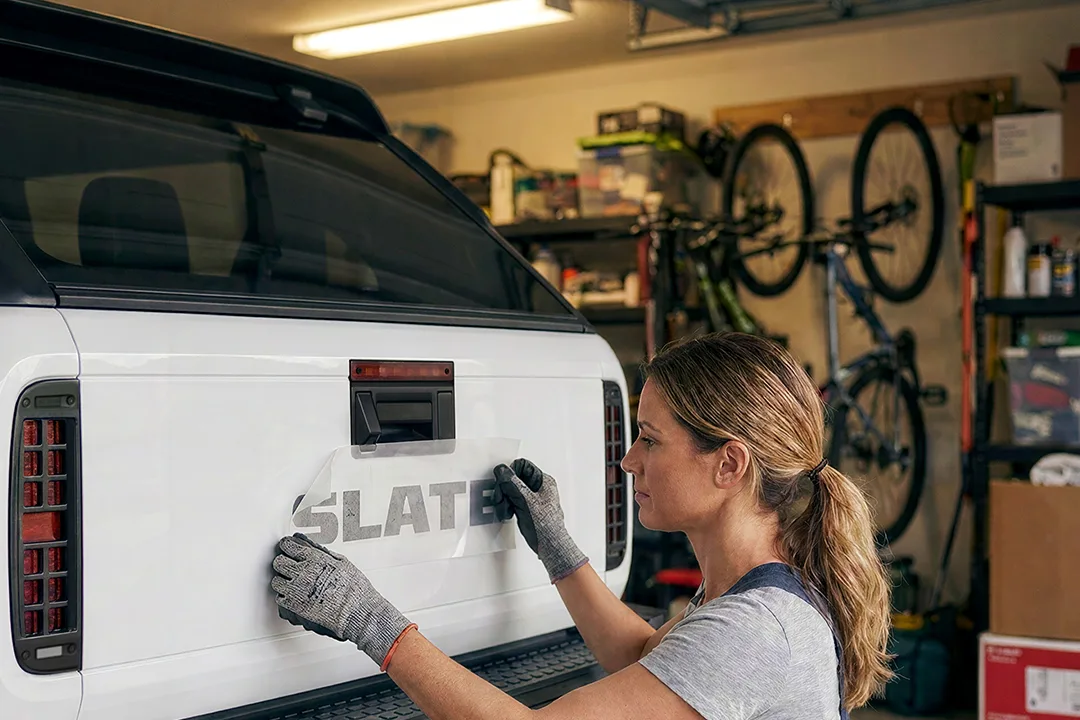
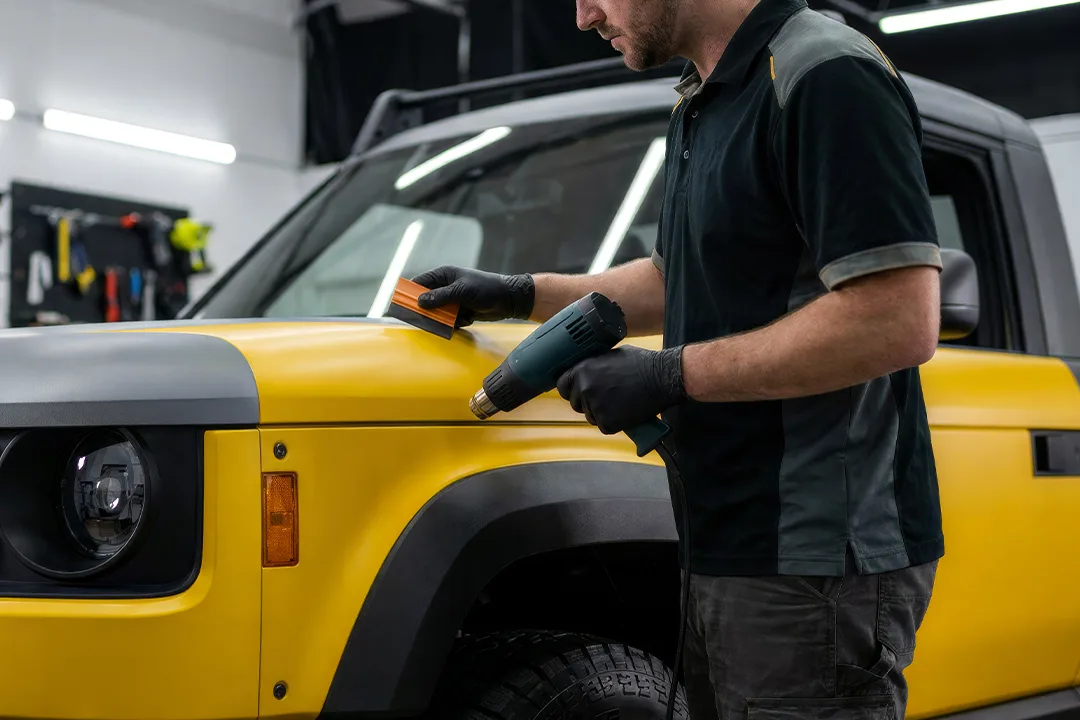
Not at all. Every Slate starts with a Slate Gray body. If you like it, leave it that way. Wrap or not, you don’t have to choose before you secure a Slate.
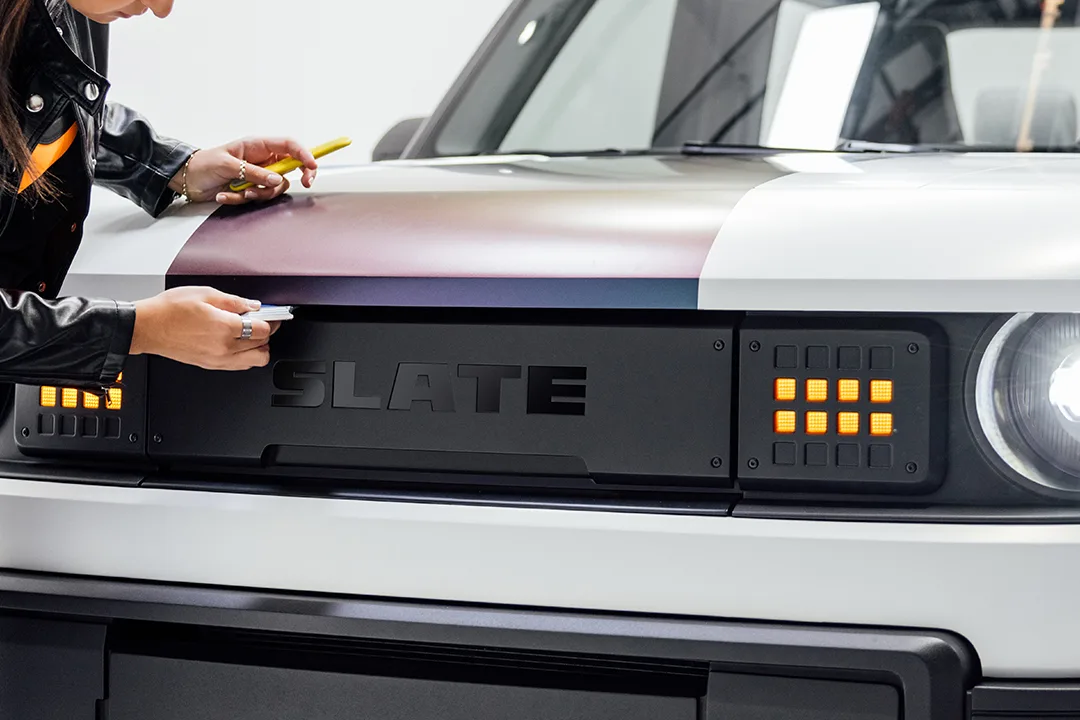
Full wraps start around $500. Professional installation is targeted at $500 for full wraps, $400 for partial wraps, and $200 for decals. Browse all the available wraps and decals and see pricing in our Accessories Marketplace.
A Decal covers part of a panel or two (stripes, accents, graphics). Easiest place to start.
A Partial Wrap covers some full body panels, not all.
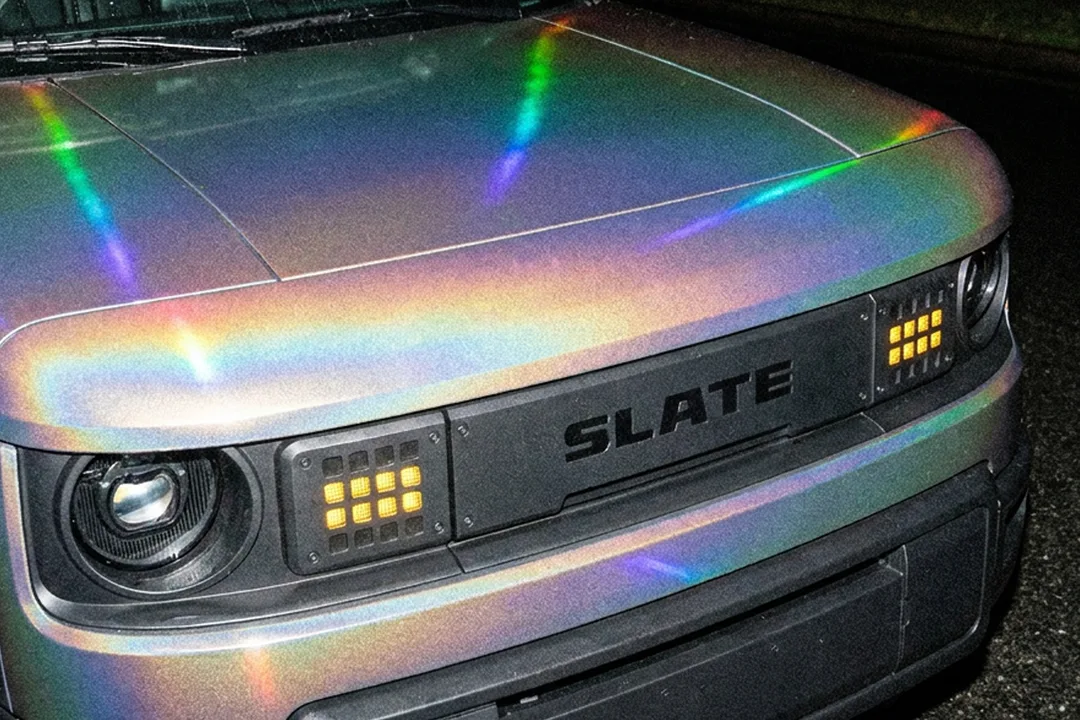
A Full Wrap covers every exterior panel and changes the entire body color of the Slate.
Typically 3–5 years, and up to 5–7 with proper care and protection from the elements. The average can also vary on the film you’ve selected (i.e., our specialty wraps may wear sooner than our classics due to material type). Heat, sun, washing habits, and garage vs. street parking all play a part, too. A garaged truck in a cool climate will outlast one sitting in the hot sun.
Don’t wash for the first 5–7 days after installation, while the adhesive cures. Once it’s ready for a wash, hand wash with mild, non-abrasive soap. Going automatic? Choose touchless, since brush washes can lift edges. Treat a pressure washer as a last resort, only after other cleaning methods haven’t done the job. If you do use one, keep it 3+ feet from edges and use a 40-degree wide-angle spray pattern. Pressure washing can lift edges or degrade the vinyl surface. Skip carnauba wax and use a vinyl-safe sealant free from petroleum distillates instead. Clean off sap, droppings, and bugs right away before they stain.
In hotter, sunnier climates, expect the lower end of the 3-5 year range. Vinyl degrades faster under constant UV and heat, so a wrap in Phoenix or Albuquerque won't last as long as the same wrap in Seattle.
Park in a garage or shade when you can and wash on a regular schedule so contaminants don’t bake into the film. Some gloss fade on the hood and roof over the years is normal aging, not a defect.
Cold weather alone won’t damage a wrap, but winter habits can. Vinyl gets stiffer in the cold, so anything you scrape or pry at is more likely to leave a mark. Clear snow with a soft brush or a blower before it packs down and freezes. Never use an ice scraper on a wrapped panel.
Watch out for salt, especially along the lower doors, rockers, and wheel arches. A touchless wash every week or two through salt season is enough to prevent salt damage.
Not the way you’d fix paint. Vinyl can’t be buffed or polished, so a scratch that's gone through the film doesn’t come out with compound and a machine. Light surface marks sometimes relax with gentle heat from a hair dryer, but cuts or tears in the film are permanent.
The upside? Wrap repairs are sectional. Highway gravel tends to hit the same places, usually the lower front end and rocker area. You can replace damaged sections individually without having to re-wrap the whole truck. A certified installer can handle it.
Yes. Removed within its service life, the film comes off cleanly and the body underneath is the same body it was on day one. Any leftover adhesive wipes away easily with isopropyl alcohol (IPA), so if you’re taking it off yourself, don’t skip that step, or you may be left with sticky residue.
Expect to pay a little more for installation, since the old film and its adhesive must come off first. That cleanup takes time that a fresh install doesn't.
For a short-term look, yes — as long as the wrap underneath has no peeling, bubbling, or fading.
For the long haul, remove the old one first; wrapping over an aging wrap makes the new one fail faster and lets imperfections show through.