What Goes into EV Battery Range?
Several key factors determine how far an EV can go between charges:
- Battery size & chemistry: Larger packs generally mean longer range, but chemistry and efficiency play just as big a role.
- Vehicle weight: Heavier vehicles consume more energy per mile, lowering overall efficiency.
- Aerodynamics: Streamlined body design reduces drag, extending range at highway speeds.
- Tire selection: Low-resistance tires help maximize efficiency but must be balanced with grip and durability.
- Driving style & terrain: Aggressive acceleration, towing, hills, and high speeds can all reduce range.
- Climate control use: Heating and cooling systems also draw power from the battery.
Slate’s Approach to Range
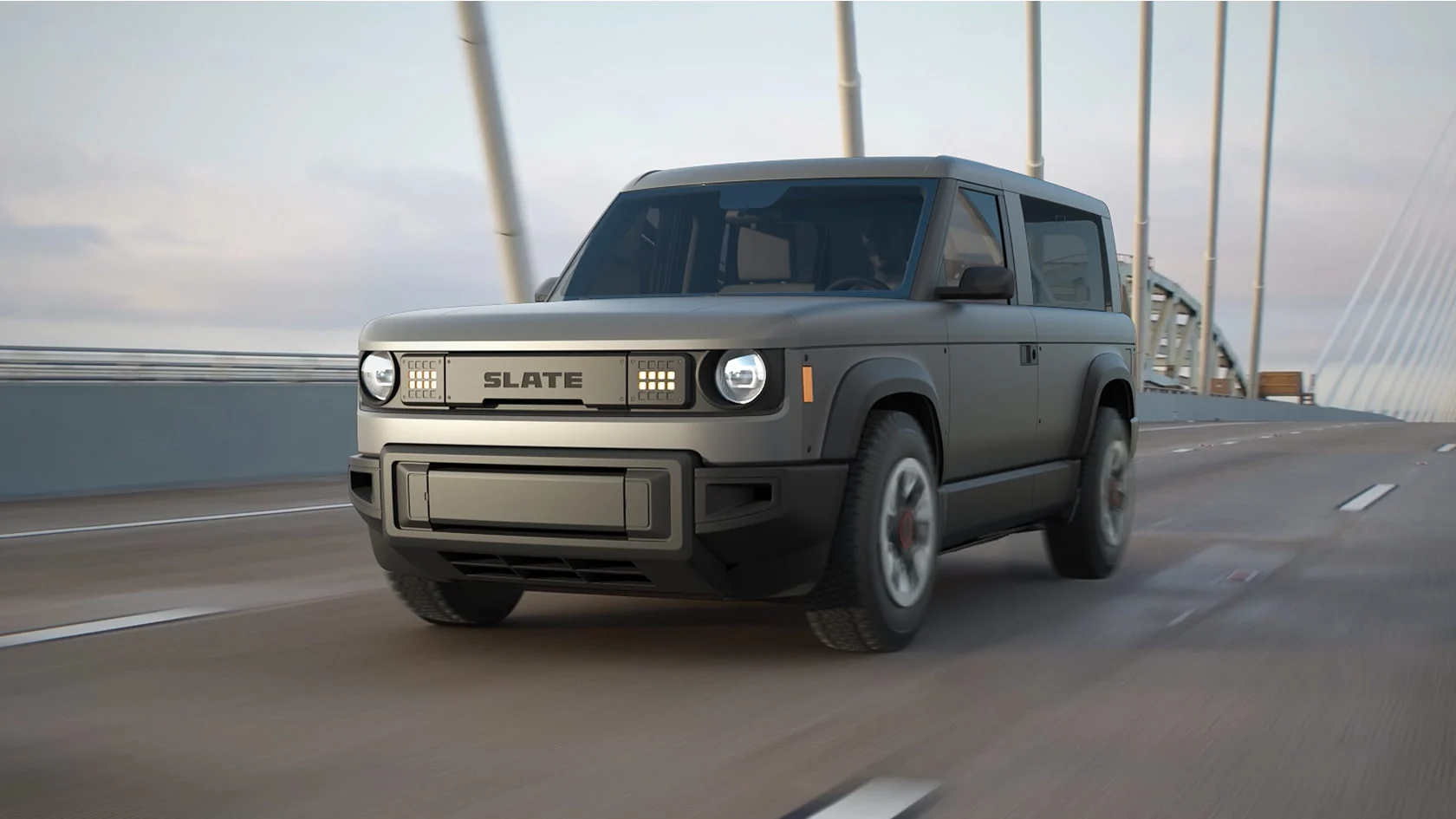
Slate offers a projected 205 miles with its standard battery pack (EPA-estimated figures pending). While some competitors chase 300+ miles, we’re focused on practical, everyday driving that balances range with affordability, efficiency, and capability.
- Right-sized battery: Slate avoids oversizing its battery (and adding unnecessary weight or cost), which makes the vehicle more efficient and adaptable.
- Lighter platform: By keeping the design simple and lean, Slate squeezes more efficiency out of every kilowatt-hour.
- Real-world utility: Slate is engineered to cover daily commutes, weekend adventures, and rural drives without requiring excessive charging stops.
Slate vs. Other Automakers
Most automakers take one of two approaches:
- High-range, high-cost EVs: Vehicles boasting 300–400 miles of range often come with oversized batteries that increase cost, weight, and charging time.
- Entry-level EVs with limited capability: Some lower-cost EVs offer modest range but sacrifice utility, capability, or versatility.
Slate sits in the sweet spot:
- Enough range for real-world needs like commuting, errands, rural trips, and more.
- A lighter, more efficient platform that avoids the trade-offs of bloated batteries.
- Built for adaptability and charging flexibility, rather than chasing headline numbers.