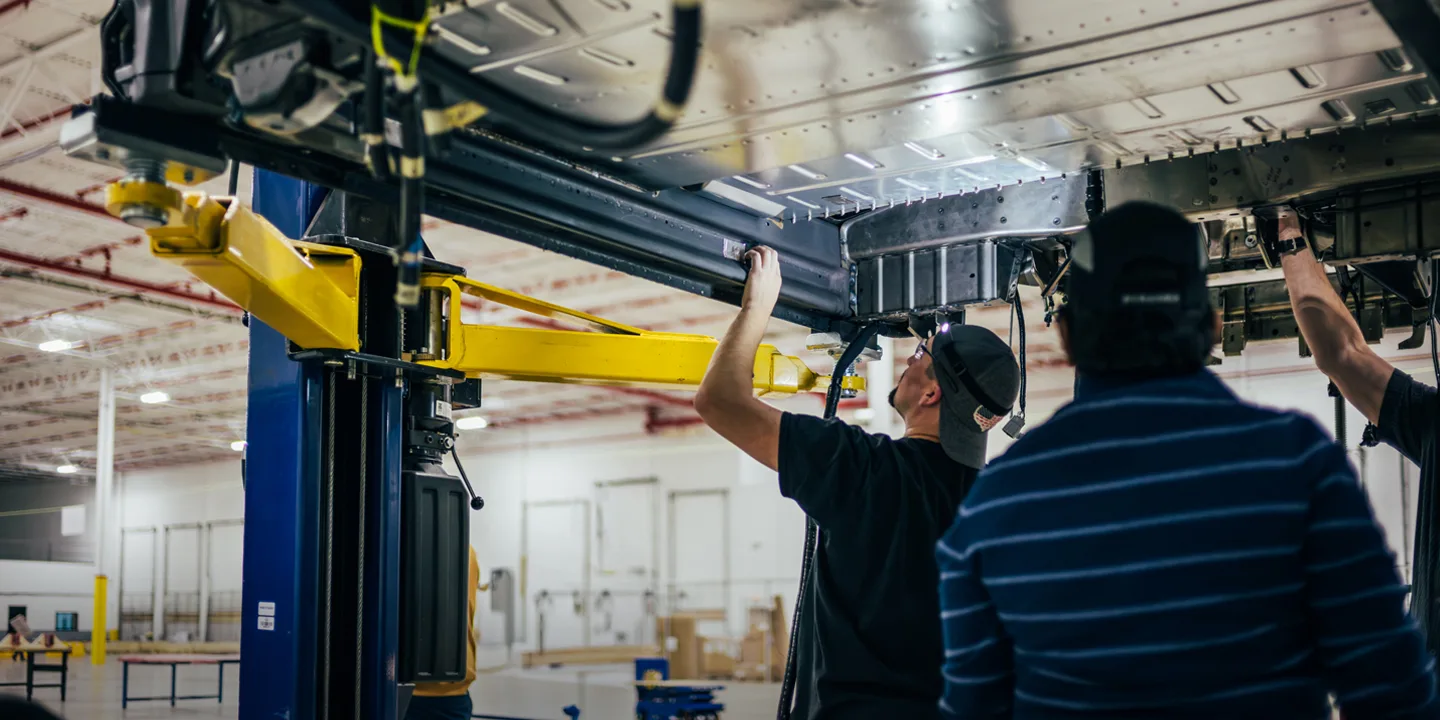
HOW IS SERVICING AN EV DIFFERENT?
EVs have far fewer moving parts than internal combustion vehicles, which eliminates many of the most common maintenance needs, like:
- No oil changes: EVs don’t use engine oil, so there’s no oil to change.
- Fewer fluid needs: No transmission fluid or exhaust system maintenance, just brake fluid and coolant checks.
- Less brake wear: Thanks to regenerative braking, which uses the motor to slow the vehicle and capture energy, brake pads last significantly longer.
- Simplified drivetrains: With no belts, spark plugs, or complex gearboxes, there’s less to break down over time.
WHAT NEEDS SERVICING ON AN EV?
While EVs cut down on many maintenance items, some areas still require attention:
- Tires: Just like any vehicle, EVs need tire rotations, balancing, and eventual replacement.
- Suspension & steering: Components wear naturally with driving conditions.
- Cabin filters & HVAC: Air filters and heating/cooling systems require periodic replacement and inspection.
- Battery health checks: Software and hardware monitoring ensures long-term performance and safety.
SERVICE THE SLATE WAY.
Slate is designed to minimize complexity from the start, which keeps service simple and affordable. Routine needs will mostly involve tires, brakes, and system checks rather than frequent shop visits.
To make that easy, we’ve partnered with RepairPal to deliver Certified Slate service through a nationwide network of more than 4,000 independent service shops across the U.S. — so you’ll have a trusted service option nearby.