For decades, Warsaw, Indiana (population: 16,000), had the second largest post office in the Hoosier State. Come December, the amount of mail that went through this compact city in Kosciusko County was nothing short of astounding.
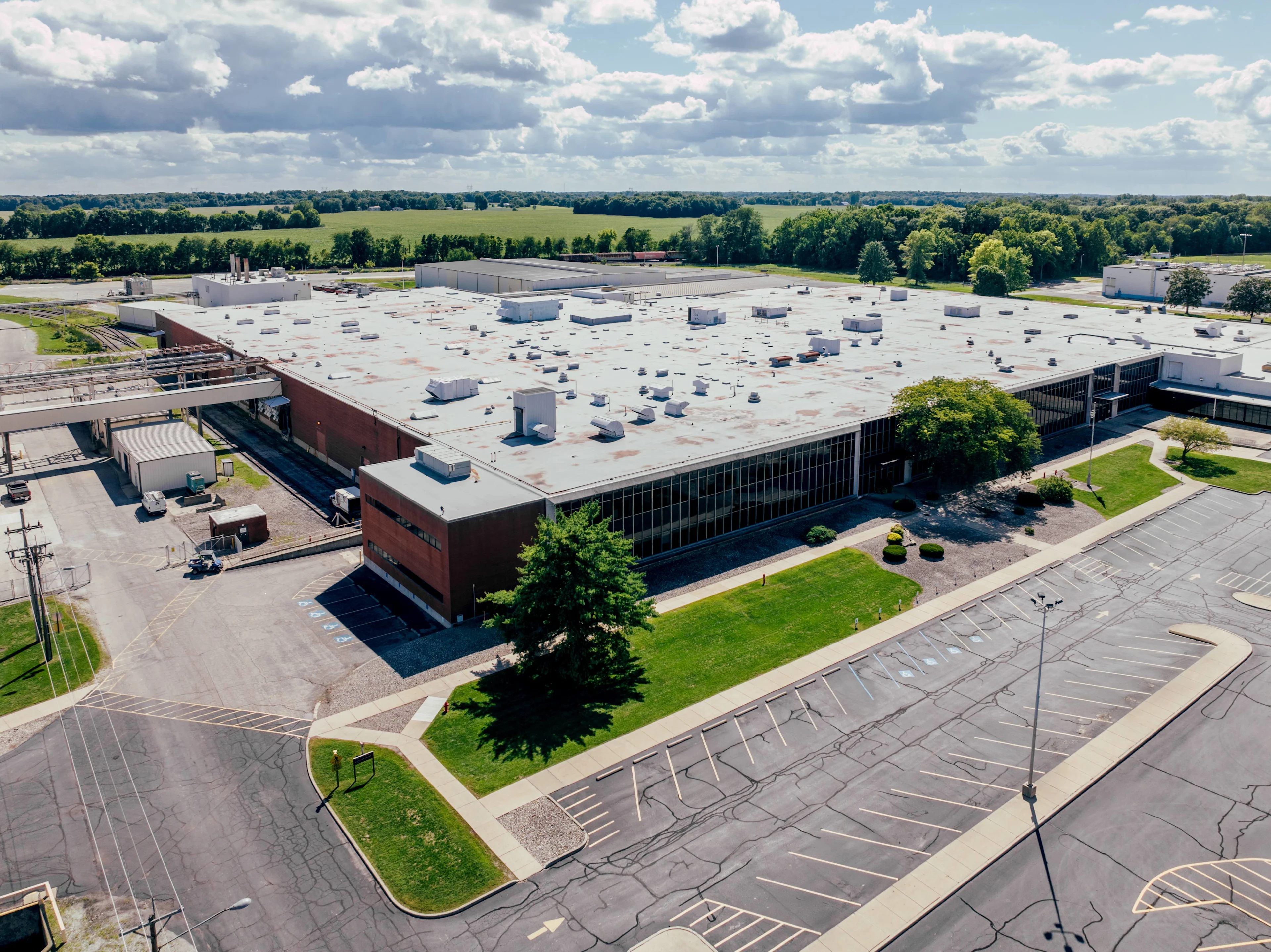
That’s because it was home to an RR Donnelley & Sons plant, which printed millions of catalogues for the likes of JCPenney and Sears, as well as magazines including AARP, Modern Maturity, and even Spin. At its peak, the company employed 1,800 people in Warsaw, and its buildings were filled with gravure presses longer than school buses and towering reams of paper weighing thousands of pounds.
By the time the plant closed in 2023, after the digital revolution had done its damage on print, only 525 employees remained. The company sold off most of the equipment and closed the doors on 65 years of history.
Turns out that was just one chapter in a longer story. Last year Slate announced it would transform the 1.4 million-square-foot printing plant into a state-of-the-art automobile factory. Over the next 20 years, Slate projects the factory will contribute $39 billion to Indiana’s economy and bring more than 2,000 jobs to Warsaw. One of their first local hires was Don Stoneburner, who spent more than 40 years working at the Donnelley plant. “You can’t make history without building on what came before,” says Stoneburner, now a senior electrical engineer with Slate. “That’s why we’re building here. It’s going to be great for the community.”
November 12, 2026
A New Chapter
How Slate turned a former Indiana printing plant into an automotive hub
Simplifying manufacturing
Several states competed for Slate’s business, but Indiana won for a variety of reasons, including its proximity to suppliers and the fact that the factory was the perfect size for Slate’s needs. Most car factories clock in at five or six million square feet, but Slate is radically simplifying manufacturing. “We’ve removed all unnecessary content to reduce cost and increase reliability,” says Chris Barman, president of vehicles. “You could say we took out everything that wasn’t a car.”
Since the Slate Truck is built in one configuration, or SKU, with no variants, all the complexity that normally lives inside an auto factory has been moved out of it. Fewer parts—about 800 compared to as many as 4,000 for some vehicles—means lower logistics costs, less storage space, and less lineside space to present parts to the build. Body panels are injection-molded plastic rather than metal, so there’s no heavy stamping machinery. And since Slates only come in Slate Gray and can later be wrapped in any color imaginable, there’s no paint shop, which is one of the most capital-intensive parts of an automotive plant.
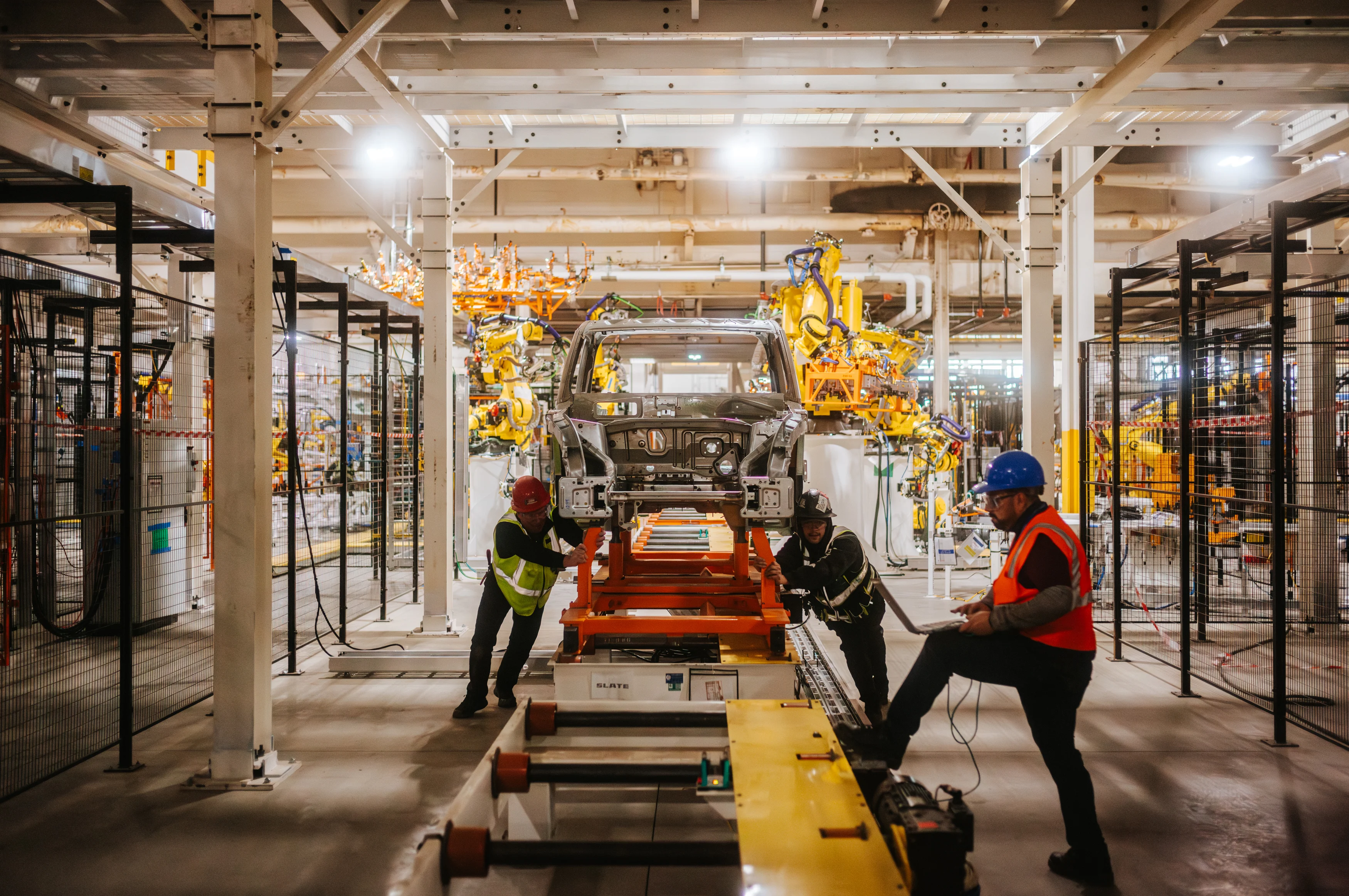
Still, transforming the plant into an automobile factory was no easy task. First, they had to remove ink tanks and presses, tear down walls, and pour concrete floors that could support large robots. Then they had to start building. “Most OEMs do things in order: one, then two, then three,” says Dan Tasiemski, Slate’s head of engineering manufacturing. “Part of us being a startup is that we have to do things in parallel. The advantage is we can get things done so much quicker.”
Working in parallel rather than step by step turned out to be a catalyst, the kind of creative pressure that fits naturally with Slate’s fast, frugal, and scrappy DNA. A great example of this ingenuity is how the team built the trim line. An inner-building courtyard was smack-dab in the middle of where the line was supposed to run. Instead of waiting for the contractors to remove it and pour a new concrete floor, the team started work on the line at either end of the room, ready to meet in the middle when the time came. “It reminded me of Promontory Summit in Utah, where the transcontinental railroad met, coming from the west and from the east,” says Tasiemski. “They drove a golden spike there to commemorate it, so I put a golden-painted anchor at the center of the line once we completed it.”
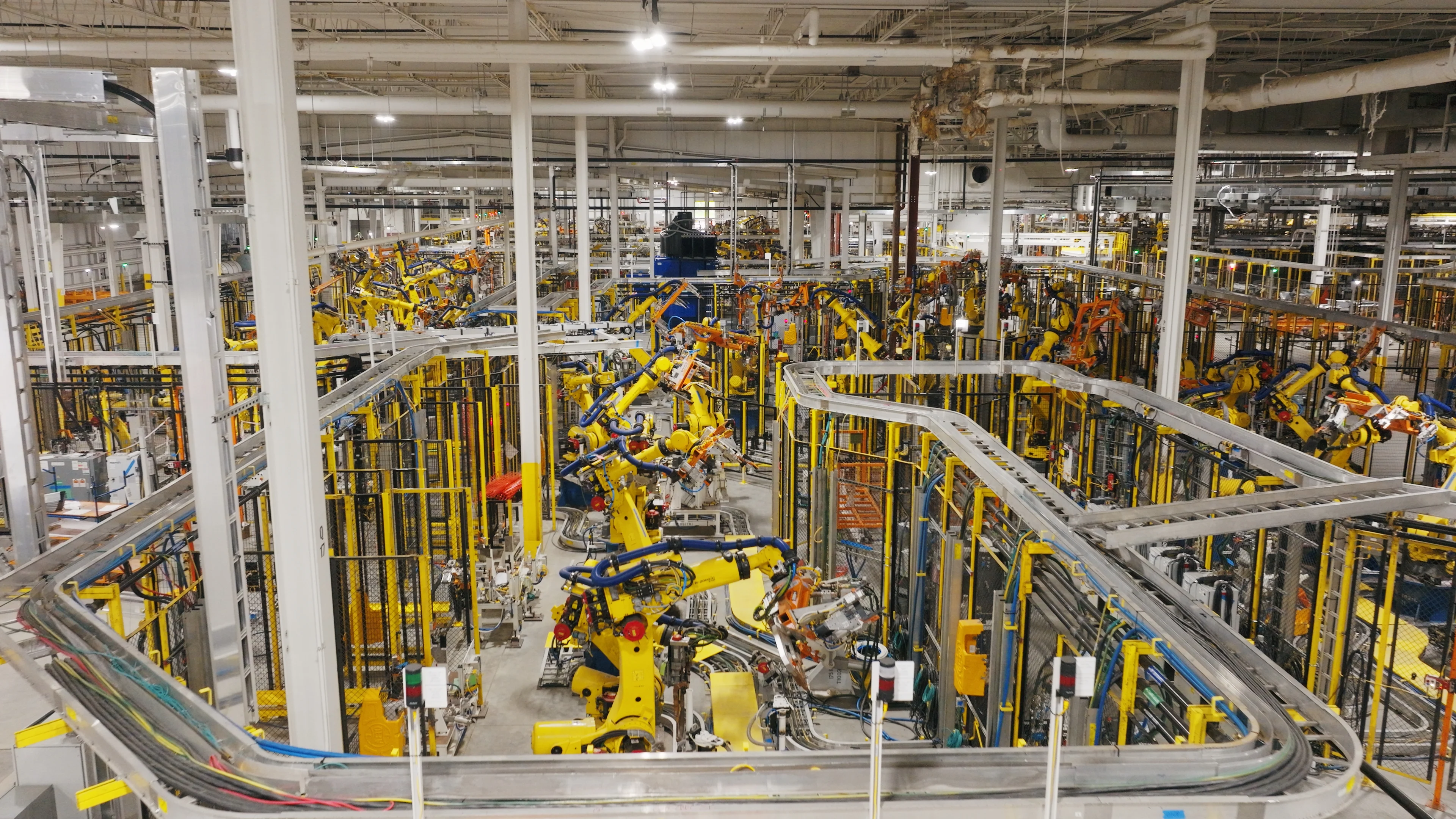
While people work the trim line and general assembly, robots build the car bodies. The factory’s body shop is now home to 374 robots: Spot-welding robots stitch together car bodies, articulated robots fasten together panels, material handling robots move parts between stations. They look oddly balletic, repeating their patterns like pirouetting metal dinosaurs.
Other stations within the factory include an electrocoating facility, where car bodies get dunked in a solution and zapped with an electrical current to coat every nook and cranny with an anti-corrosion primer; a four-point shaker, which uses hydraulic rams to independently move each wheel, simulating real road conditions to test the suspension and shake out any noise or vibration issues; and a buzz, squeak, and rattle track for testing whether there’s any unwanted noises or loose components in the vehicles.
Making It Real
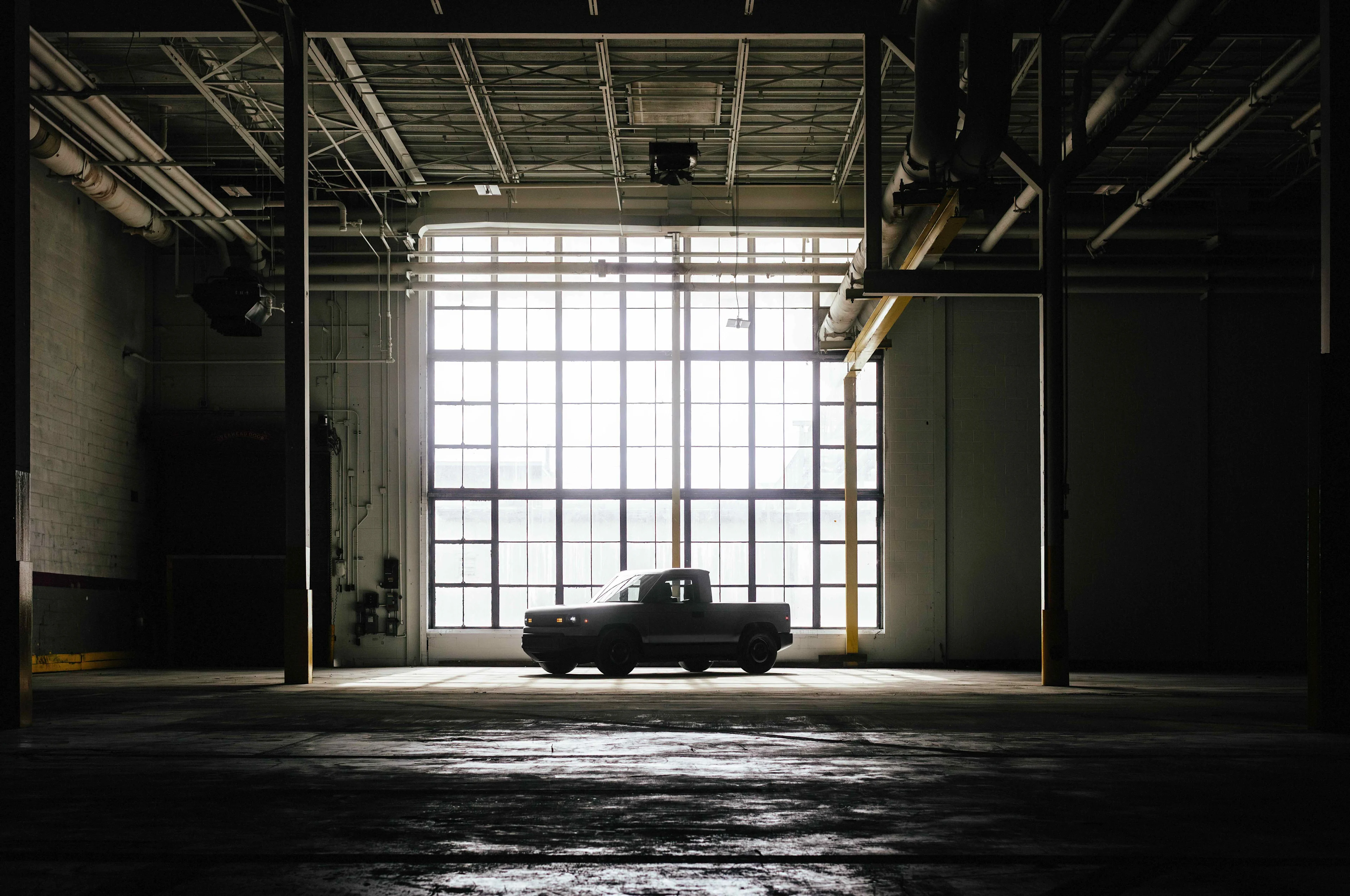
On May 1, three days earlier than planned, Slate began building its design validation (DV) vehicles, which is where engineers test whether the vehicle’s design actually works as intended under real-world conditions, not just in theory or on a computer simulation. In just a week they completed the first DV build. When one of the engineers drove the Truck around the factory floor, everyone cheered and applauded—just the kind of encouragement the team needed to keep the momentum going.
The team has since built several dozen DV vehicles. The next stage is production validation (PV), which confirms that the team can build vehicles consistently, and at scale. It's essentially the last major hurdle before the full production launch. By PV, everything about the Truck needs to be fine-tuned so the team can focus on confirming that the manufacturing process itself works.
And once it does? The Slate Truck—the car America has been asking for—will finally start rolling off the line and into your driveway. Warsaw may no longer have the state’s second largest post office, but, come December, the city will be delivering plenty of joy.
SHOPPING CART
Your cart is empty.
Subtotal
$0.00